
You Don’t Know Waynesville: The Old Stagecoach Stop Was Hours from Demolition—Until Citizens Saved It
- Jax Welborn
- Feb 1
- 8 min read

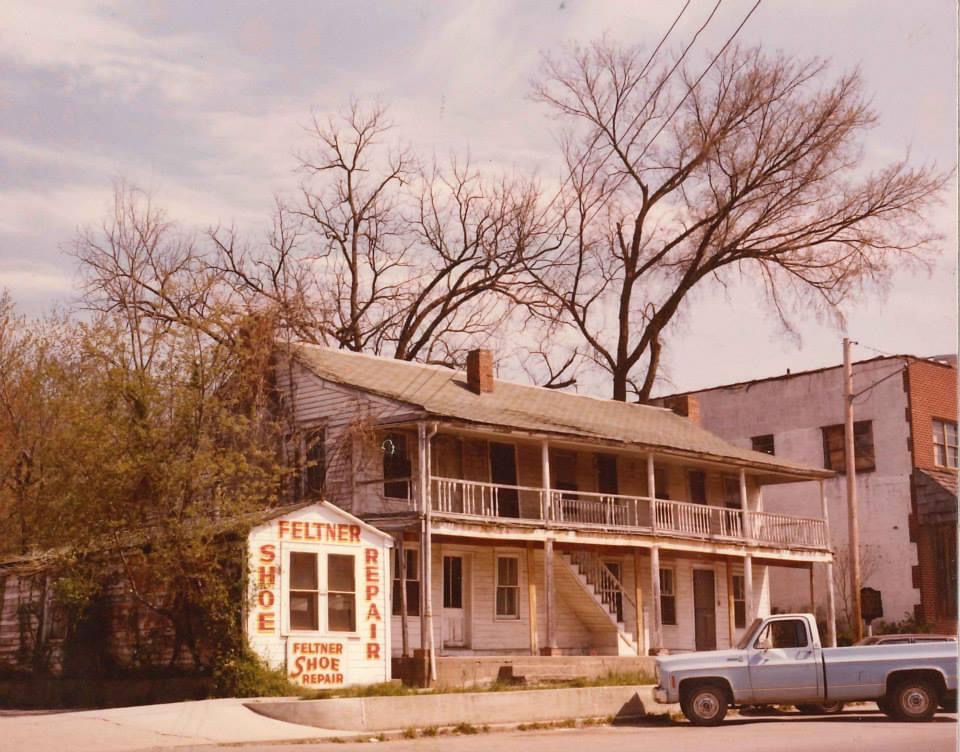
December 1982. The wrecking ball was coming for Pulaski County’s oldest publicly accessible building. The City of Waynesville had issued a condemnation notice, declaring the structure at 106 Lynn Street a hazardous building. After nearly twenty years of abandonment and vandalism, the 128-year-old building that had sheltered stagecoach passengers, Civil War soldiers, Route 66 travelers, and World War II recruits was slated for destruction.
But this story doesn’t end with demolition. It ends with a museum celebrating its 30th anniversary, welcoming visitors from all 50 states and more than 50 countries. The Old Stagecoach Stop stands today because ordinary citizens refused to let Waynesville’s history vanish.
Before Route 66: A Building Born of Frontier Commerce

The story begins in 1854, when William Walton McDonald—a Mexican-American War veteran and farrier—purchased Lot 4 of Block 6 in the Original Town of Waynesville. He built a double-pen log structure (two cabins connected by an open breezeway) just east of the courthouse square, perfectly positioned on the St. Louis-Springfield Road.
McDonald’s building served passengers on the Burden and Woodson stage line, which ran three times weekly from St. James to Springfield. In 1856, he became Waynesville’s Postmaster, operating the post office from the same building where weary travelers stopped for rest and meals.
When the Civil War erupted, the St. Louis-Springfield Road became strategically vital for Union forces. In June 1862, the 13th Missouri State Militia under Colonel Albert Sigel commandeered McDonald’s building for use as a post hospital. Local accounts suggest that dozens of soldiers died there during the war years, though specific records remain elusive. The building served Union forces until 1865.
After the war, technological change arrived swiftly. The Pacific Railroad reached Pulaski County in 1869, and stagecoaches vanished. In 1870, Alexander Bryan purchased the property and transformed it dramatically—adding a second story and rear lean-to to convert the modest stagecoach stop into a ten-room hotel. Over the decades, it would be known by various names: Waynesville House, Johnson House, Black Hotel, and Tourist Hotel.
Route 66 Breathes New Life into an Aging Hotel
1926 changed everything. Route 66 was commissioned through Waynesville, and when the road was paved in 1931, traffic surged. The old hotel, which had survived on its status as a county seat waystation, suddenly found new purpose serving Mother Road travelers.
The building sat on the town square, right on the path of America’s Main Street. Tourists heading west to California or east back to Chicago stopped in Waynesville, and some needed a place to stay. The aging structure, by now more than 70 years old, adapted once again to serve a new generation of travelers.
Route 66 kept Waynesville alive through the lean years of the Great Depression. While rural towns across the Ozarks withered, the Mother Road brought commerce, conversation, and cash through the Pulaski County seat.
Fort Leonard Wood and the WWII Boom
1941 brought an even more dramatic transformation. The U.S. Army broke ground on Fort Leonard Wood, and seemingly overnight, thousands of construction workers flooded into the area. The old hotel, which had been struggling to compete with more modern accommodations, suddenly had more customers than it could handle.
World War II soldiers who couldn’t find housing at the fort spilled into Waynesville. The Old Stagecoach Stop building, which had housed Civil War troops eight decades earlier, once again provided shelter for men in uniform. Through WWII, the Korean War, and into the early Vietnam era, the hotel served military personnel.
The building had survived nearly a century by adapting: from stagecoach stop to Civil War hospital, from frontier tavern to Route 66 hotel, from tourist lodging to military housing. But by the 1960s, its luck was running out.
The Slow Death: 1960s-1982
The Vietnam buildup sparked brief business at the “old hotel,” but years of neglect had taken their toll. By the mid-1960s, the building couldn’t compete with modern motels offering air conditioning, private bathrooms, and parking lots. The historic structure closed its doors.
For nearly twenty years, the building sat empty on the town square. Vandals broke windows. Walls deteriorated. The transient military population at Fort Leonard Wood knew nothing of the building’s history, and even many native residents had forgotten its significance.
November 24, 1980: The building was listed on the National Register of Historic Places—one of only six sites in Pulaski County to earn this distinction and one of only two with statewide significance. The federal government had recognized what Waynesville was losing.
But recognition didn’t equal salvation. The owner made no substantial improvements. The building continued to deteriorate.
Then came December 1982 and that condemnation notice. Pulaski County’s oldest publicly accessible building—a structure that had witnessed 128 years of American history—was marked for demolition.

The Rescue: June 8, 1983
Six months after the condemnation notice, something remarkable happened.
On June 8, 1983, local citizens formed the Old Stagecoach Stop Foundation, a nonprofit organization dedicated to one purpose: “to preserve, restore, protect and maintain the historic structure known as the ‘Old Stagecoach Stop’ in order to permit its educational value to be appreciated by future generations.”
The driving force was Gene and Maxine Farnham, who led negotiations to purchase the building and became the catalyst behind the entire rescue effort. Together with James and Connie Martin these two local couples stepped forward to purchase the structure for approximately $40,000—a significant sum in 1983 for a building the city wanted torn down.
The Foundation faced a daunting challenge: How do you raise $40,000 in a small Ozarks town to save a building most people considered an eyesore?
They got creative. Bake sales. Concerts. In 1985, they held their first public auction at the Old Settlers Day Picnic—an event that continues today. They compiled recipes from the Black Hotel era (1894-1915) and sold cookbooks. They sold commemorative bricks, memberships, and advertising in the Old Settlers Gazette, an annual heritage newspaper.
The community responded. Slowly, dollar by dollar, bake sale by bake sale, the debt shrank.
1984: Maxine Farnham received the Waynesville-St. Robert Chamber of Commerce Citizen of the Year award for her preservation efforts—recognition that the entire community understood what was at stake.
Circa 1986: Just three years after forming, the Foundation paid off the initial $39,000 debt.
Spring 1992: Nine years of community fundraising culminated in the final mortgage payment. The building was saved. Permanently.

The Restoration: Student Archaeologists and Room-by-Room Revival
Saving the building was only the beginning. The Foundation set an ambitious goal: restore one room per year, ready for tours by Old Settlers Days.
But first, they wanted to know what secrets lay beneath the floorboards.
September 1989: The Foundation partnered with the Waynesville R-VI School District’s L.E.A.P. program (Learning Enrichment and Acceleration Program) for an archaeological excavation. Twenty-nine seventh and eighth-grade students, working with the University of Missouri and U.S. Forest Service, began what would become a seven-year dig.
The discoveries were remarkable: broken china and glass, military buttons from the Civil War era, glass syringes from the hospital period, and numerous marbles—later explained when research revealed that former owner J.L. Johnson had been a “marble champion.” KY3 television documented the dig in September 1990, filming student interviews that are now shown to museum visitors. Watch the video here:
Meanwhile, restoration proceeded room by room:
- 1994: Dentist Office (1935-1941 period)
- 1995: McDonald Cabin (the original 1854 log cabin)—the museum officially opened
- 1996: Civil War Room & Archaeology Display
- 1997: Stagecoach Stop Tavern
- 1998: 1950s Room & 1915 Kitchen
- 1999: 1946 Kitchen
- 2000: 1941 Sleeping Room
- 2001: Restoration Gallery—ten rooms completed
The Foundation’s work earned national recognition. They won the Midwest Living Magazine Hometown Pride Award for Preservation—the grand prize in the preservation category, selected from 650 entrants across the Midwest.
In fall 2010, the museum hosted the Smithsonian Institution’s “Journey Stories” traveling exhibit as part of the Museum on Main Street program—chosen as one of only six Missouri organizations from 32 applicants.


Today: A Living Museum Powered by Volunteers
Walk into the Old Stagecoach Stop today, and you’ll step back through 170 years of American history. Ten restored rooms, each representing a different era, tell the story of how one building adapted and survived through stagecoach days, the Civil War, Route 66’s heyday, and the Fort Leonard Wood boom.
Guides dressed in period clothing lead tours lasting approximately 1.5 hours. Unlike most museums, the Old Stagecoach Stop encourages hands-on interaction—visitors can touch and handle many original artifacts, from Civil War-era medical instruments to Route 66-era hotel registers.

The museum operates Saturdays only, 10:00 AM to 4:00 PM, April through October. Admission is free (donations appreciated). The entire operation runs on nine volunteer board members. Annual operating costs are just $7,500—a testament to the dedication of unpaid community members who give their time to preserve Waynesville’s history.
Current volunteers include President Jeanie Porter and longtime educators/researchers Terry and Jan Primas, who authored “Doorways to the Past” and co-authored the definitive “Records from Post Waynesville 1862-1865.”
Since opening in 1995, the museum has welcomed guests from all 50 states and more than 50 countries. Christmas on the Square events have drawn 600-900 visitors in a single evening.
The Building That Wouldn’t Die
The Old Stagecoach Stop has survived because it kept adapting: from frontier tavern to military hospital, from Route 66 hotel to living museum. But its survival in 1983 came down to something simpler and more powerful—citizens who refused to let their history be bulldozed.
Gene and Maxine Farnham with James andConnie Martin along with other founding members didn’t have millions of dollars. They had bake sales and auctions. They didn’t have professional archaeologists. They had seventh-graders with trowels and brushes. They didn’t have paid staff. They had volunteers willing to spend their Saturdays giving tours.
And they saved a building.
That’s the real story of the Old Stagecoach Stop. Not just what happened within its walls over 170 years, but what happened because of those walls—because a community decided that some things are worth saving, even when everyone else says to tear them down.
You can visit the Old Stagecoach Stop at 106 Lynn Street on the east side of the Waynesville town square. For group tours or more information, contact Jeanie Porter (573-336-3561) or Jan Primas (573-528-7150). Learn more at [oldstagecoachstop.org](http://oldstagecoachstop.org).


Recommended primary source for further research: "Records from Post Waynesville 1862-1865" by John Bradbury and Terry Primas (2016)—the scholarly source cited by Wikipedia that might verify Civil War casualty claims.
-----
This is part of the “You Don’t Know Waynesville” series, exploring obscure facts about Waynesville, Missouri as the town prepares for dual centennial celebrations in 2026: Route 66’s 100th anniversary and America’s 250th anniversary.
References
Primary Sources:
Old Stagecoach Stop Foundation. (n.d.). Building History. Retrieved from http://www.oldstagecoachstop.org/building.html
Old Stagecoach Stop Foundation. (n.d.). Restoration. Retrieved from https://www.oldstagecoachstop.org/restoration.html
Old Stagecoach Stop Foundation. (n.d.). The Stagecoach Business. Retrieved from https://www.oldstagecoachstop.org/WW/stagebusiness.html
Old Stagecoach Stop Foundation. (n.d.). William Walton McDonald. Retrieved from http://www.oldstagecoachstop.org/WW/WW1.html
Old Stagecoach Stop Foundation. (Fall 2013). Newsletter - 30th Anniversary Edition. Retrieved from https://www.oldstagecoachstop.org/newsletterFALL2013.pdf
Secondary Sources:
Old Stagecoach Stop. (n.d.). In Wikipedia. Retrieved February 2, 2026, from https://en.wikipedia.org/wiki/Old_Stagecoach_Stop
National Register of Historic Places. (1980). Old Stagecoach Stop [NRHP Reference #80002391]. National Park Service.
Historic Marker Database. (n.d.). Old Stage Coach Stop Historical Marker. Retrieved from https://www.hmdb.org/m.asp?m=21618
Coombs, C. (n.d.). Old Stagecoach Stop in Pulaski County, Missouri. Medium. Retrieved from https://medium.com/@cjcwriter04/old-stagecoach-stop-in-pulaski-county-missouri-b8a9090ffe6c
Keys to the Past: Old Stagecoach Stop restored treasure. (2023, August 17). Pulaski County Weekly. Retrieved from https://www.pulaskicountyweekly.com/keys-to-the-past-old-stagecoach-stop-restored-treasure/article_1feee9e0-3c37-11ee-80c1-63cc2bff5370.html
We the People: The Old Stagecoach Stop in Waynesville. (2025, August 14). KY3. Retrieved from https://www.ky3.com/2025/08/14/we-people-old-stagecoach-stop/
Daybreak on the Road: Old Stagecoach Stop in Waynesville, Missouri. (2022, May). OzarksFirst. Retrieved from https://www.ozarksfirst.com/daybreak-on-the-road/daybreak-on-the-road-old-stagecoach-stop-in-waynesville-missouri/
Old Stagecoach Stop House Museum. (n.d.). Clio. Retrieved from https://theclio.com/entry/152680
Old Stagecoach Stop in Waynesville, Missouri. (n.d.). Route 66 Road Map. Retrieved from https://route66roadmap.com/attractions/old-stagecoach-stop-in-waynesville-missouri/
Old Stagecoach Stop Museum. (2026). TripAdvisor. Retrieved from https://www.tripadvisor.com/Attraction_Review-g45024-d2441363-Reviews-Old_Stagecoach_Stop_Museum-Waynesville_Pulaski_County_Missouri.html
Recommended for Further Research:
Bradbury, J., & Primas, T. (2016). Records from Post Waynesville 1862-1865. [Scholarly work cited by Wikipedia but not directly accessed for this article]
Note on the "32 deaths" claim: This statistic appears in the OzarksFirst article (source #12) but could not be independently verified in official museum documentation, National Register nomination, or scholarly sources. It is presented in the blog post as "local accounts suggest" to reflect this uncertainty.


Comments