
From Greyhound Glory to Creative Canvas: Waynesville’s Route 66 Bus Terminal
- Jax Welborn
- Feb 15
- 3 min read

Updated: Feb 15
You Don't Know Waynesville:
The Nearly Forgotten Bus Station on Route 66
By Jax Welborn | JaxOnRoute66.com
On July 11, 1963, a gleaming Greyhound Scenicruiser rolled up to 106 Historic Route 66 in Waynesville, marking the grand opening of the town’s new bus terminal. R.A. “Sully” Sullivan, Springfield’s District Superintendent, directed the inaugural loading as townspeople gathered to admire the modern facility.

The single-story building represented serious investment in Waynesville’s future. Workers had excavated 9,000 square yards of dirt to create the 4,875-square-foot structure, which housed three businesses under one roof: Traveler’s Restaurant, Phil’s Clothing and Jewelry, and room for another store.

Inside Traveler’s Restaurant, passengers found a classic 1960s lunch counter—curved with chrome-trimmed stools, a waitress in crisp uniform, and shelves stocked for the road-weary traveler. It was the kind of place where soldiers heading home from Fort Leonard Wood could grab a hot meal and civilians could watch the world pass through on America’s Main Street.
That Scenicruiser parked out front was no ordinary bus. The GMC PD-4501, built exclusively for Greyhound between 1954 and 1956, featured a revolutionary two-level design inspired by railroad dome cars. With panoramic windows, onboard restrooms, and air conditioning, these 40-foot coaches represented the pinnacle of highway travel. Only 1,001 were ever built, making them icons of the open road.
The terminal’s timing was no accident. Fort Leonard Wood, established in December 1940 and located just five miles west, had transformed Waynesville from a quiet Ozarks town into a military crossroads. By 1963, the post was training thousands of soldiers annually—engineers, military police, and by 1964, drill sergeants at the newly established Drill Sergeant School. The Vietnam buildup would push those numbers even higher, with 123,000 soldiers trained in 1967 alone.
Every one of those soldiers had families. Wives traveling to join husbands. Parents visiting sons before deployment. Young men heading home on leave, duffel bags stuffed with memories. The Greyhound terminal served them all, a vital link between Waynesville and the rest of America.
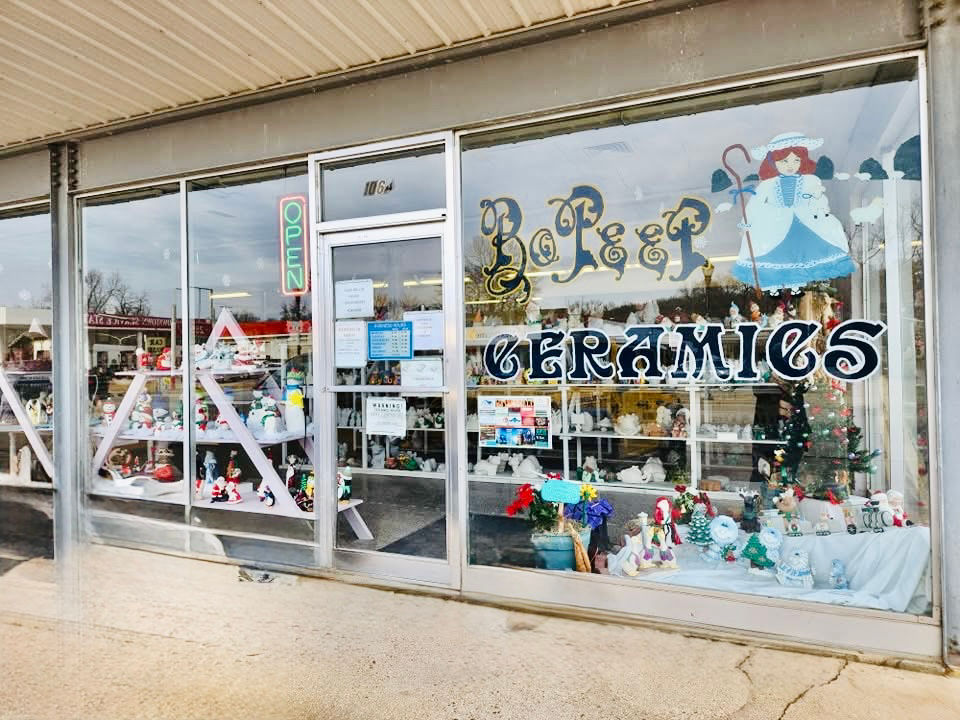
But highways change, and so do towns. When I-44 bypassed Waynesville in the 1970s, Greyhound service eventually ended. The terminal building found new purpose as Bo Peep Ceramics, where generations of locals learned to shape clay and glaze their creations. For decades, the shop kept the building alive and loved.
When Bo Peep closed in 2025, it could have been the end of the story. Instead, new owners Jake and Ursula Lebioda saw what Judge Robert Bell saw back in 1925—potential waiting to be unlocked.

They’ve preserved the bones of the 1963 building: the block exterior, those plate-glass windows, the high ceilings that once echoed with departure announcements. This spring, it reopens as Studio 66 Waynesville, an art studio and gallery featuring, art classes, local artists, painting sessions, and Route 66 exhibits.
The timing feels right. April 2026 is the official Kickoff for the Route 66 centennial, and Waynesville—the Birthplace of the Byway—will be ready. Where Scenicruisers once idled and soldiers once waited, artists will gather and travelers will pause to remember when the Mother Road was young.
The terminal at 106 Historic Route 66 has carried Waynesville through three eras: the glory days of bus travel, the quiet creativity of ceramics, and now a renaissance timed to honor the road that made it all possible.
Some buildings just know how to reinvent themselves.
This is Episode 7 of an ongoing series documenting obscure historical facts about Waynesville, Missouri, in preparation for the Route 66 Centennial in 2026.
Stay tuned for the next episode of "You Don't Know Waynesville," where we'll uncover more surprising facts about this historic Route 66 town.
A special thanks to Terry and Jan Primas for sharing the Newspaper photos with me.
References
∙ PocketSights Waynesville Walking Tour, “Bo Peep Ceramics, 106 Historic Route 66” (grand opening date, original businesses)
∙ Original newspaper clippings, July 1963 (construction details, Scenicruiser, Traveler’s Restaurant interior, R.A. Sullivan)
∙ Pacific Bus Museum and Wikipedia, “GMC PD-4501 Scenicruiser” (bus specifications and production numbers)
∙ U.S. Army official history, Fort Leonard Wood (establishment date, training figures, Drill Sergeant School)


Thank you, I remember it well. I used to play behind the Tasty Grill Cafe. When they started building the bus terminal they had to make a road behind the Cafe. We use to have the whole hill to play on, it just had a couple of trees on the whole hill.